2026-05-09
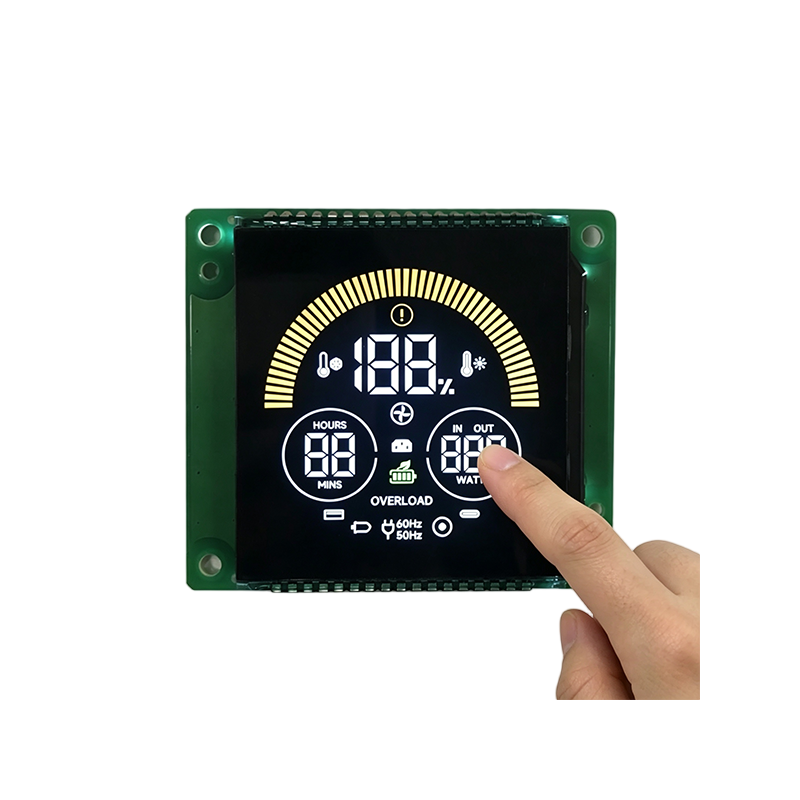
A custom segment display is a specialized visual interface designed to present numerical or alphanumeric data using tailored geometric patterns, offering unique branding and functional advantages over standard seven-segment units. Unlike off-the-shelf components, these displays are engineered to meet specific aesthetic requirements, spatial constraints, and readability goals for distinct industrial, consumer, and automotive applications. This guide explores the types, design considerations, and expert insights into leveraging custom segment technology effectively in 2026.
A custom segment display deviates from the traditional seven-segment configuration by altering the number, shape, orientation, or arrangement of segments to suit unique visualization needs. While standard displays rely on a fixed “8” pattern to form digits, custom solutions may incorporate additional segments for symbols, fractional indicators, or brand-specific logos.
These displays are typically fabricated using LED, LCD, or VFD (Vacuum Fluorescent Display) technologies, depending on the required brightness, viewing angle, and environmental durability. The primary goal is to enhance user interaction by providing clearer data representation that aligns perfectly with the device’s overall design language.
Industries increasingly adopt these tailored solutions to differentiate products in crowded markets. By controlling every aspect of the segment geometry, manufacturers can ensure optimal legibility under specific lighting conditions while reinforcing brand identity through proprietary visual styles.
Standard seven-segment displays are mass-produced with rigid specifications, limiting designers to pre-defined fonts and sizes. In contrast, a custom segment display allows for complete flexibility in:
This level of customization ensures that the display is not merely an add-on component but an integral part of the product’s industrial design, enhancing both functionality and visual appeal.
Selecting the right technology is fundamental to the performance of a custom segment display. The choice depends largely on the operating environment, power constraints, and visibility requirements. Three primary technologies dominate the current landscape: LED, LCD, and VFD.
Light Emitting Diode (LED) technology remains the most popular choice for custom segment applications due to its high brightness and longevity. LEDs are ideal for environments where visibility in direct sunlight or low-light conditions is critical.
Modern custom LED segments utilize surface-mount devices (SMD) that allow for extremely compact designs. Engineers can arrange these diodes behind custom-molded light pipes or diffusers to create seamless, uniform illumination across complex shapes.
However, LED solutions require careful thermal management and current regulation to maintain consistent color and brightness over the product’s lifespan.
Liquid Crystal Display (LCD) technology offers a low-power alternative, particularly suitable for battery-operated devices. Custom LCD segments are created by patterning the glass substrates to define the active areas, allowing for intricate designs that would be difficult to achieve with discrete LEDs.
Reflective LCDs leverage ambient light, making them highly readable in bright environments without consuming significant power. For low-light scenarios, custom backlighting systems can be integrated beneath the liquid crystal layer.
The main advantage of LCDs in custom applications is the ability to create very fine lines and complex characters within a thin profile. This makes them perfect for wearable technology, medical instruments, and handheld meters where space is at a premium.
Executing such precise customization requires significant manufacturing capability. For instance, Dalian Eastern Display Co., Ltd. operates two advanced factories in Dalian and Dongguan, equipped with professional production lines dedicated to monochrome LCD screens and modules. With an annual capacity of 50,000 square meters of LCD screens and 10 million display modules, they specialize in OEM and ODM services. Having successfully designed and produced over 10,000 unique products—ranging from segment codes and character dot matrices to graphic dot matrix LCDs—they serve as a qualified supplier for many well-known manufacturers in home appliances, automotive electronics, medical equipment, and industrial instrumentation.
Although older than LED and LCD, Vacuum Fluorescent Display (VFD) technology retains a niche in high-end custom applications. VFDs emit their own light with a characteristic blue-green glow that offers exceptional contrast and wide viewing angles.
Custom VFD segments are prized for their aesthetic quality and ability to operate reliably in varying temperatures. They are often found in automotive dashboards, high-fidelity audio equipment, and industrial control panels where a premium look and feel are required.
The trade-off involves higher power consumption compared to reflective LCDs and more complex driving circuitry, but the visual impact often justifies the engineering effort for flagship products.
Developing a custom segment display is a collaborative process involving industrial designers, electrical engineers, and optical specialists. The journey from concept to production requires meticulous planning to ensure the final unit meets all functional and aesthetic criteria.
Creating a successful custom display involves several critical phases. Skipping any step can lead to costly revisions or compromised performance in the field.
Each stage feeds into the next, creating an iterative loop that refines the display until it perfectly matches the product specifications. Early involvement of the manufacturing partner is crucial to identify potential production bottlenecks.
One of the most challenging aspects of custom segment design is achieving uniform illumination. Unlike standard modules, custom shapes can create uneven light paths, leading to dark spots or varying intensity across a single digit.
Engineers must carefully select diffuser materials and design light guides that scatter photons evenly. The thickness of the overlay, the distance between the light source and the lens, and the refractive index of the materials all play pivotal roles.
Furthermore, color consistency is vital for multi-digit displays. Variations in LED binning or phosphor coating can result in noticeable color shifts between adjacent segments, which must be mitigated through strict component selection and calibration algorithms.
Choosing the right technology for a custom segment display depends on balancing performance, cost, and environmental factors. The following table outlines the key differences between the primary options available in 2026.
| Feature | LED Custom Display | LCD Custom Display | VFD Custom Display |
|---|---|---|---|
| Brightness | Very High (Sunlight Readable) | Moderate (Requires Backlight for Dark) | High (Self-Emissive) |
| Power Consumption | Moderate to High | Very Low (Reflective Mode) | Moderate to High |
| Viewing Angle | Wide (Dependent on Lens) | Limited (Without Compensation Film) | Excellent (Near 180 Degrees) |
| Temperature Range | Wide (-40°C to +85°C) | Limited (Slow Response in Cold) | Wide |
| Customization Flexibility | High (Shape & Arrangement) | Very High (Fine Details) | Moderate (Grid Constraints) |
| Typical Cost | Low to Moderate | Low (High Volume) | High |
This comparison highlights that while LEDs offer robustness and brightness, LCDs excel in power efficiency and detail, whereas VFDs provide a premium aesthetic with excellent viewing characteristics. The decision ultimately rests on the specific priorities of the end application.
The versatility of custom segment displays has led to their adoption across a diverse range of industries. Each sector leverages the technology to solve specific user interface challenges that standard components cannot address.
In the automotive sector, dashboard clusters and infotainment systems increasingly rely on custom displays to convey speed, fuel levels, and warning icons. The ability to tailor segment shapes allows designers to integrate these readouts seamlessly into curved instrument panels.
Safety is paramount; therefore, these displays must remain legible under direct sunlight and at night without causing glare. Custom LED solutions with adaptive brightness control are the industry standard here, ensuring drivers can glance at information instantly.
Electric vehicles (EVs) further drive demand for unique symbols representing battery status, charging rates, and regenerative braking levels, which often require non-standard segment configurations.
Medical equipment demands absolute clarity and reliability. Custom segment displays in infusion pumps, patient monitors, and diagnostic tools often feature large, high-contrast digits that can be read from a distance or in dimly lit hospital rooms.
Hygiene is another factor; custom overlays can be designed with smooth, sealed surfaces that resist cleaning agents and prevent bacterial growth. The ability to customize colors also helps in coding different modes or alarm states intuitively.
Regulatory compliance often dictates specific font sizes and contrast ratios, making off-the-shelf solutions inadequate for many specialized medical devices.
From smart home thermostats to high-end coffee machines, consumer products use custom segments to enhance user experience. A unique font or icon style can become a signature element of a brand’s product line.
In appliances, displays must withstand heat, humidity, and frequent button presses. Custom designs allow manufacturers to place indicators exactly where users expect them, reducing cognitive load and improving usability.
Moreover, the trend towards minimalist design favors hidden displays that only illuminate when active, a feat easily achieved with custom LED arrays behind tinted polycarbonate lenses.
Implementing a custom segment display offers significant benefits but also introduces specific engineering hurdles. Understanding these trade-offs is essential for project planning and risk management.
These advantages often translate into higher customer satisfaction and reduced support costs, as intuitive displays minimize confusion during operation.
Despite the benefits, custom projects face higher upfront development costs and longer lead times compared to sourcing standard components. The design phase requires specialized expertise in optics and electronics.
Supply chain management can also be more complex, as custom molds and specific LED bins may have longer procurement cycles. Additionally, testing protocols must be more rigorous to validate the performance of non-standard configurations.
Maintenance and replacement parts may be harder to source years down the line if the custom tooling is not preserved. Therefore, long-term lifecycle planning is a critical consideration for product managers.
As we move through 2026 and beyond, the landscape of custom segment displays continues to evolve driven by advancements in materials science and connectivity. Several key trends are shaping the future of this technology.
Modern custom displays are no longer isolated output devices. They are increasingly integrated with Internet of Things (IoT) capabilities, allowing remote monitoring and dynamic content updates. Firmware-over-the-air (FOTA) updates can now adjust display behavior or fix bugs without physical access.
Smart drivers enable features like automatic dimming based on ambient light sensors or context-aware information display, showing only relevant data at specific times. This intelligence enhances energy efficiency and user relevance.
Environmental concerns are driving a shift towards more sustainable materials and processes. Manufacturers are exploring bio-based plastics for lenses and housings, as well as lead-free soldering techniques.
Energy efficiency remains a top priority, with new LED architectures offering higher lumens per watt. This reduces the carbon footprint of battery-powered devices and aligns with global regulatory standards for energy consumption.
Recyclability is also being designed into products from the start, ensuring that custom display modules can be easily disassembled and recovered at the end of their lifecycle.
The push for smaller, wearables-friendly devices is accelerating the adoption of Micro-LED technology in custom segments. These microscopic light sources allow for incredibly high resolution and brightness in tiny form factors.
Micro-LEDs enable complex animations and video-like effects within traditional segment layouts, blurring the line between static displays and full-color screens while maintaining the simplicity and reliability of segment-based interfaces.
Addressing common queries helps clarify the complexities surrounding custom segment displays and aids decision-makers in evaluating their suitability for upcoming projects.
The lead time varies significantly based on complexity and technology. For simple LED customizations, prototyping may take 4-6 weeks, with production tooling adding another 8-10 weeks. More complex LCD or VFD projects involving new glass masks or vacuum tubes can extend the timeline to 12-16 weeks or more. Early engagement with suppliers is recommended to align with product launch schedules.
In many cases, yes, but modifications are often necessary. Custom segment displays may have different pinouts, voltage requirements, or physical footprints compared to standard modules. It is advisable to involve the display manufacturer during the schematic design phase to ensure compatibility and avoid costly board respins.
Color consistency is achieved through strict binning of LED components and calibrated driving currents. Reputable manufacturers will sort LEDs into narrow color and brightness bins before assembly. Additionally, implementing feedback loops in the driver firmware can compensate for aging and temperature variations to maintain uniform appearance over time.
Initially, custom displays incur higher Non-Recurring Engineering (NRE) costs for design, tooling, and prototyping. However, in high-volume production, the unit cost can become competitive with standard parts, especially when considering the value added by improved usability and brand differentiation. The total cost of ownership should be evaluated rather than just the per-unit price.
Manufacturers typically require vector files (such as AI, DXF, or Gerber) defining the segment shapes and dimensions. Detailed mechanical drawings specifying thickness, mounting holes, and connector locations are also essential. Providing a clear functional specification document outlining brightness, color, and environmental requirements ensures the final product meets expectations.
Successfully deploying a custom segment display requires more than just technical knowledge; it demands a strategic approach to product development. Industry experts emphasize the importance of cross-functional collaboration throughout the design cycle.
One common pitfall is underestimating the optical challenges of custom shapes. What looks good on a computer screen may suffer from uneven lighting in reality. Building multiple iterations of optical prototypes is a best practice that saves time and money in the long run.
Another critical insight is the need for robust testing. Custom displays often operate in harsher or more variable conditions than standard office environments. Accelerated life testing, including thermal shock and humidity exposure, validates the durability of the custom materials and bonding agents used.
Furthermore, experts suggest designing for manufacturability (DFM) from day one. Simplifying the segment geometry slightly can sometimes drastically reduce tooling costs and improve yield rates without compromising the visual intent. Open communication with the fabrication team is key to finding these optimizations.
A custom segment display represents a powerful tool for enhancing product identity, usability, and performance. By moving beyond the limitations of standard seven-segment units, manufacturers can create interfaces that are perfectly tailored to their specific application needs, whether in automotive dashboards, medical devices, or consumer electronics.
The choice of technology—be it LED, LCD, or VFD—should be guided by a clear understanding of the operational environment and user requirements. While the path to customization involves greater initial investment in design and tooling, the long-term benefits in terms of brand differentiation and user satisfaction are substantial.
Who should consider this solution? Product managers and engineers looking to elevate their device’s user interface, solve specific spatial constraints, or establish a unique brand visual language are ideal candidates for custom segment technology.
To proceed, start by defining your precise visibility and aesthetic goals. Engage with experienced display partners early in the design phase to explore feasibility and optimize costs. With the right strategy, a custom segment display can become the defining feature that sets your product apart in the market of 2026 and beyond.