2026-05-20
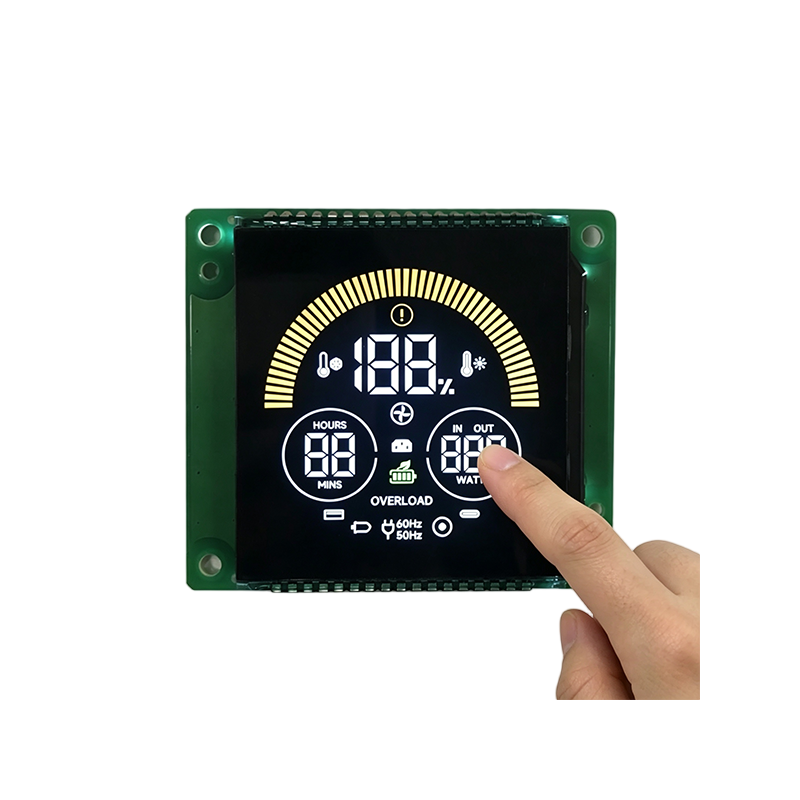
An lcd segment display is a specialized electronic visual interface designed to present numeric data, simple characters, and static symbols with exceptional clarity and low power consumption. Unlike complex graphical screens, these displays utilize fixed segments shaped into digits or icons, making them the industry standard for appliances, industrial meters, and automotive dashboards where reliability and readability are paramount.
The fundamental operation of an lcd segment display relies on the manipulation of liquid crystals sandwiched between two glass substrates. When an electric field is applied to specific electrodes, the alignment of the liquid crystal molecules changes, altering how light passes through or reflects off the panel. This binary state—either blocking light or allowing it to pass—creates the visible contrast required to form numbers and symbols.
These displays are distinct from dot-matrix or graphic LCDs because their pattern is fixed during manufacturing. The “segments” are pre-defined shapes, typically arranged in a seven-segment configuration for numbers, though more complex custom patterns exist. This fixed architecture significantly reduces the driving electronics complexity and power requirements compared to pixel-based alternatives.
In modern applications, the technology has evolved to include various optical modes. Reflective types rely on ambient light, making them ideal for battery-powered devices used outdoors. Transmissive types require a backlight for visibility in dark environments, while transflective models offer a hybrid approach, ensuring readability across diverse lighting conditions without excessive energy drain.
Understanding the underlying physics helps in selecting the right component for harsh environments. The liquid crystal material itself does not emit light; it acts as a shutter. In a typical twisted nematic (TN) cell, the molecules naturally twist light by 90 degrees. When voltage is applied, they untwist, stopping the light rotation. Combined with polarizers, this mechanism creates the dark-on-light or light-on-dark effect users see.
Multiplexing is a critical concept in driving these displays. To reduce the number of connection pins, manufacturers use time-division multiplexing. This technique activates rows and columns in rapid succession, faster than the human eye can perceive, creating the illusion that all segments are lit simultaneously. This efficiency allows for compact controller designs and lower overall system costs.
Selecting the correct type of lcd segment display depends heavily on the operating environment and power constraints. The industry generally categorizes these components based on their optical mode and driving method. Each type offers unique advantages tailored to specific use cases, from simple kitchen timers to sophisticated medical instrumentation.
The choice of optical mode dictates where the device can be effectively deployed. Reflective displays utilize a mirror-like layer behind the liquid crystals to bounce ambient light back to the viewer. They consume virtually no power for illumination but become unreadable in total darkness unless an external light source is present.
Transmissive displays, conversely, depend entirely on a backlight unit (LED or EL). They provide excellent contrast in low-light scenarios but suffer from poor visibility under direct sunlight and higher power consumption. This makes them suitable for indoor control panels or devices that are always plugged in.
Transflective displays represent the premium solution for versatile applications. They combine a partially reflective and partially transmissive layer. In bright sunlight, they act like reflective displays, using natural light. In dim conditions, the backlight illuminates the segments. This dual-mode capability is why they are frequently chosen for automotive clusters and outdoor industrial meters.
Beyond optics, the driving method defines the complexity and performance of the display. Static drive assigns a dedicated connection to every segment. This method offers the highest contrast and widest viewing angle but requires many pins, limiting its use to simple displays with few digits.
Multiplex driving shares connections among multiple segments, activating them in rapid cycles. Common multiplex ratios include 1/2, 1/3, 1/4, and up to 1/8 or higher. While this reduces pin count and allows for more complex layouts, it can slightly reduce contrast and narrow the optimal viewing angle if not engineered correctly. High-end controllers now mitigate these issues effectively.
| Feature | Reflective | Transmissive | Transflective |
|---|---|---|---|
| Light Source | Ambient Light Only | Backlight Required | Ambient + Backlight |
| Power Consumption | Ultra-Low | High (with BL) | Moderate |
| Sunlight Readability | Excellent | Poor | Excellent |
| Night Visibility | None (without BL) | Excellent | Excellent |
| Typical Use Case | Calculators, Watches | Indoor Appliances | Automotive, Outdoor Meters |
When evaluating display technologies for embedded systems, understanding the trade-offs of an lcd segment display is essential. While they dominate specific niches, they are not a universal solution for every visual interface requirement. Their strengths lie in efficiency and durability, while their limitations revolve around flexibility.
The primary driver for adoption is power efficiency. Because they only change state when data updates and reflective types need no backlight, they can run for years on a single coin cell battery. This characteristic is unmatched by OLED or TFT technologies, which constantly refresh pixels or require continuous backlighting.
Readability is another cornerstone advantage. The high contrast ratio of segment displays, especially in positive mode (dark text on light background), ensures legibility even at extreme angles or under glare. Furthermore, the simplified driving logic reduces the processing load on the main microcontroller, freeing up resources for other critical tasks.
Cost-effectiveness cannot be overstated. For applications requiring only numeric output or fixed status icons, segment displays are significantly cheaper than graphical alternatives. The tooling for custom glass is mature, allowing for bespoke layouts without the prohibitive costs associated with custom TFT manufacturing.
The most significant limitation is the lack of flexibility. Once the glass is manufactured, the segment pattern is permanent. You cannot display arbitrary graphics, animations, or changing fonts. If the product requirements evolve to need dynamic charts or images, a hardware redesign becomes necessary.
Temperature sensitivity is also a factor. Liquid crystals have a specific operating range. Below the lower limit, response times slow down drastically, causing ghosting. Above the upper limit, the material can turn isotropic, rendering the display completely black. Specialized wide-temperature formulations exist but come at a premium.
Viewing angle dependence varies by technology. Standard TN cells may invert colors or lose contrast when viewed from steep angles. While IPS-like technologies exist for segment displays, they are less common. Designers must ensure the device enclosure positions the screen within the optimal cone of vision for the end-user.
The versatility of the lcd segment display ensures its presence in nearly every sector of the electronics industry. From consumer gadgets to heavy machinery, these displays provide the critical link between machine data and human understanding. Their reliability makes them the go-to choice for mission-critical readouts.
In the home, these displays are ubiquitous. Microwave ovens, washing machines, and air conditioners rely on them to show time, temperature, and cycle status. The ability to customize icons for specific functions—like a “lock” symbol or a “steam” indicator—makes them highly user-friendly. Battery-operated devices like thermometers and scales benefit immensely from the low-power reflective modes.
Personal care products, such as electric toothbrushes and shavers, also utilize small segment displays to indicate battery levels or cleaning modes. The ruggedness of the glass substrate ensures these devices withstand drops and moisture better than fragile graphical screens.
Industrial environments demand robustness. Multimeters, pressure gauges, and flow meters use large, high-contrast segment displays that can be read from a distance. The immunity to electromagnetic interference (EMI), when properly shielded, makes them suitable for factory floors with heavy machinery.
In the medical field, precision is non-negotiable. Infusion pumps, glucose monitors, and patient vital sign monitors often employ segment displays for their fail-safe nature. A dedicated segment either lights up or it doesn’t, reducing the risk of software-driven graphical glitches that could mislead a healthcare professional. Custom icons for medical symbols are strictly regulated and easily implemented in glass masks.
The automotive sector represents one of the most demanding applications. Dashboard clusters, radio frequency displays, and climate control panels must operate from -40°C to +85°C. Transflective segment displays with wide-temperature liquid crystals are the standard here. They ensure drivers can read speed and fuel levels instantly, regardless of whether they are driving through a tunnel or under blazing noon sun.
Electric vehicles (EVs) are increasingly using segmented displays for charging status indicators and range estimation. The clear, unambiguous presentation of numbers reduces cognitive load for drivers, enhancing safety. The long lifespan of these displays aligns perfectly with the expected lifecycle of modern vehicles.
Choosing the appropriate component involves a systematic evaluation of environmental, electrical, and aesthetic requirements. Making the wrong choice can lead to poor user experience or premature failure. Engineers should follow a structured approach to specification.
One of the strongest features of this technology is the ability to create custom glass masks. Manufacturers can etch virtually any shape into the electrode layer. This allows brands to integrate logos, unique unit symbols, or specialized status indicators directly into the display, enhancing brand identity without adding extra components.
Polarizer color and tint are also customizable. While standard gray and blue are common, options include green, yellow, or red tints to match product aesthetics or improve contrast for specific wavelengths. Anti-glare and anti-fingerprint coatings can be applied to the top surface for premium consumer products.
Executing these customizations requires a partner with significant manufacturing depth. For instance, Dalian Eastern Display Co., Ltd. operates two advanced factories in Dalian and Dongguan, equipped with professional production lines capable of producing a full range of monochrome LCD screens and modules. With an annual capacity of 50,000 square meters of LCD screens and 10 million display modules, they specialize in OEM and ODM services. Having successfully designed and produced over 10,000 unique products—including segment code, character dot matrix, graphic dot matrix, and TFT displays—they serve as a qualified supplier for many well-known manufacturers across the home appliance, automotive, medical, and industrial sectors. Their expertise ensures that even the most complex custom requirements are met with precision and reliability.
Integrating an lcd segment display into a PCB design requires careful attention to electrical characteristics. Unlike LEDs, LCDs require AC drive signals to prevent electrolysis and degradation of the liquid crystal material. DC components must be kept near zero.
The duty cycle corresponds to the multiplex rate (e.g., 1/4 duty means four commons). The bias voltage is a fraction of the supply voltage (VLCD) used to differentiate between “on” and “off” states for non-selected segments. Typical bias ratios are 1/2, 1/3, or 1/4. Matching the driver IC settings to the display specifications is crucial for achieving uniform contrast across all digits.
Failure to match these parameters results in “crosstalk,” where unselected segments faintly appear, or uneven brightness where some digits look darker than others. Modern integrated drivers often auto-calibrate these settings, but discrete designs require manual resistor network tuning.
For simple applications, direct GPIO driving is possible but consumes significant pin resources. Most modern designs utilize dedicated LCD driver ICs that communicate via serial interfaces like SPI or I2C. These controllers handle the complex waveform generation internally, simplifying the firmware development process.
Chip-on-Glass (COG) and Chip-on-Film (COF) packaging options allow for compact designs. COG bonds the driver die directly to the glass, saving space but requiring careful handling during assembly. COF uses a flexible cable, offering more mechanical flexibility for connecting to the mainboard in tight enclosures.
Under normal operating conditions, these displays can last over 100,000 hours. The limiting factor is usually the backlight (if equipped) rather than the liquid crystal material itself. Reflective displays without backlights effectively have an indefinite operational life, limited only by physical breakage or polarizer degradation from UV exposure.
Generally, no. Standard segment displays are binary; a segment is either on or off. While some advanced techniques involve rapid flickering to simulate intermediate shades, this is rarely used due to potential flicker visibility and increased controller complexity. For true grayscale, a dot-matrix or graphic LCD is required.
Use a soft, lint-free cloth slightly dampened with water or a mild isopropyl alcohol solution. Avoid spraying liquids directly onto the screen. Do not use abrasive cleaners, acetone, or strong solvents, as these can damage the polarizer film and the anti-glare coating, permanently hazing the display.
Standard displays may struggle below 0°C, exhibiting slow response times. However, specialized “wide temperature” models utilize liquid crystal mixtures formulated to remain fluid down to -30°C or even -40°C. It is critical to specify this requirement during the selection phase for outdoor or automotive applications.
In positive mode, the segments appear dark against a light background, which is ideal for daylight readability. In negative mode, the segments appear light (often illuminated by a backlight) against a dark background. Negative mode is aesthetically popular for consumer electronics but generally consumes more power if a backlight is needed for daytime visibility.
Despite the rise of high-resolution OLED and Micro-LED technologies, the lcd segment display remains resilient. The industry is seeing a shift towards ultra-low power consumption variants designed for IoT devices that must operate for decades on a single battery. Integration of touch sensors directly onto the segment glass is also gaining traction, allowing for interactive numeric entry without adding a separate touch layer.
Environmental regulations are driving the removal of hazardous substances from the manufacturing process. Lead-free soldering and RoHS-compliant materials are now standard. Additionally, there is a growing trend in using recycled glass substrates where optical quality permits, aligning with global sustainability goals.
Customization capabilities continue to expand. Digital printing techniques allow for more complex color filters and decorative borders directly on the glass, enabling designers to blend the display seamlessly into the product housing. This convergence of functionality and aesthetics ensures that segment displays will remain a staple in electronic design for the foreseeable future.
The lcd segment display stands as a testament to the principle that simpler is often better. For applications requiring clear, reliable, and energy-efficient presentation of numeric and symbolic data, it remains the superior choice over complex graphical alternatives. Its ability to function in extreme environments while consuming minimal power makes it indispensable in industrial, automotive, and medical sectors.
This technology is best suited for engineers designing battery-powered devices, instruments for harsh environments, or products where cost and readability are primary concerns. If your project involves displaying dynamic graphics, videos, or complex maps, a graphical display would be more appropriate. However, for focused data presentation, nothing beats the clarity of a well-designed segment display.
When moving forward with your design, prioritize defining your environmental constraints and power budget early. Engage with manufacturers who offer robust customization options for glass masks to tailor the interface specifically to your user’s needs. By leveraging the inherent strengths of this mature technology, you can create products that are not only functional but also enduring and user-friendly.